Where to Position Bird Feeders in Your Garden
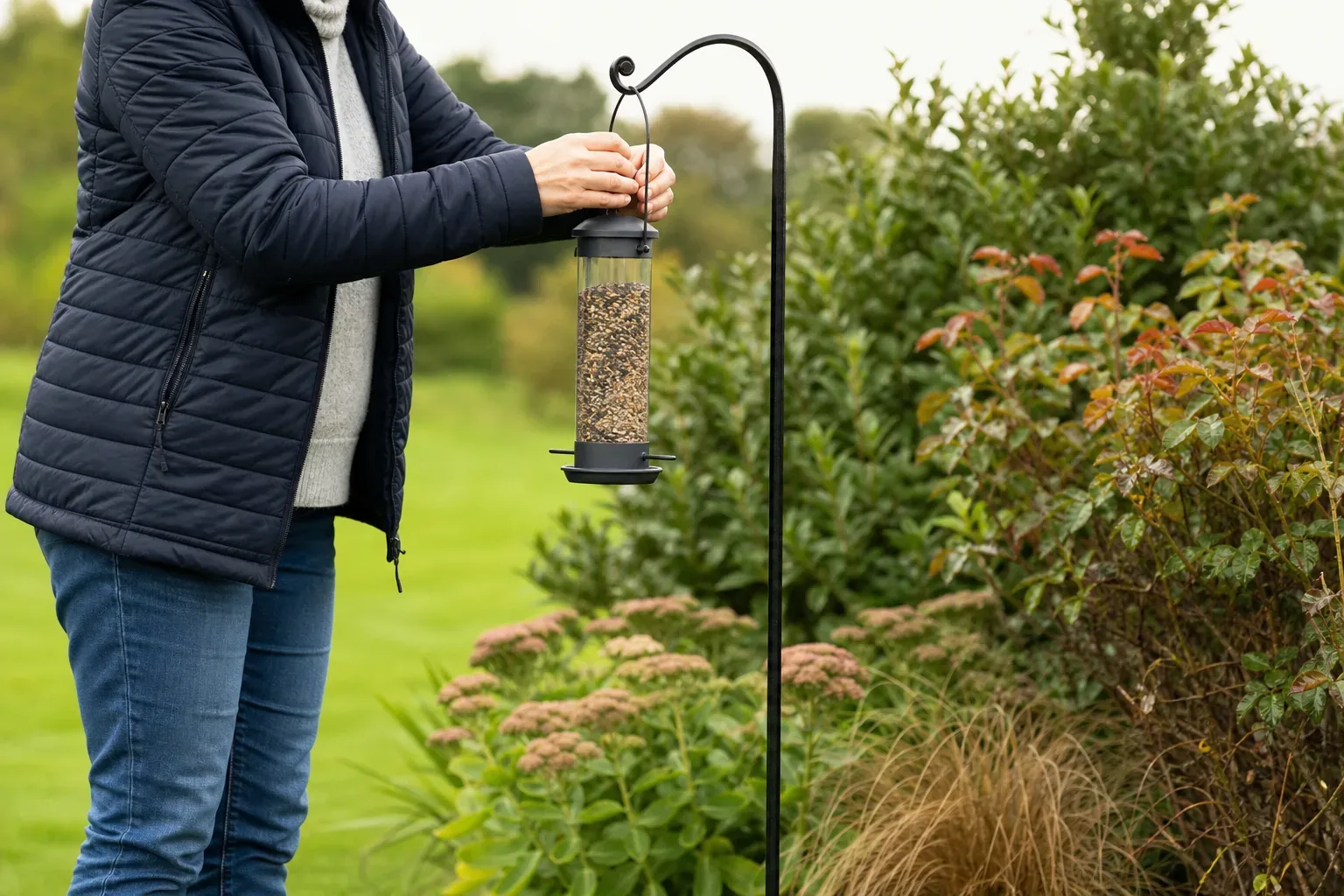
Why Placement Matters as Much as the Feeder Itself
The best tube feeder on the market will sit empty if you put it in the wrong spot. Birds assess safety before they eat, so a poorly placed feeder can deter the very species you want to attract. Getting the position right also reduces the risk of window collisions, cat predation, and wasted seed.
The Core Rules of Feeder Placement
Height Off the Ground
Mount feeders at least 1.5 metres off the ground. Below that threshold, a cat or fox can reach feeding birds without much effort, and many species simply will not settle low enough to feel secure. A freestanding feeding station with a squirrel baffle gives you flexibility to position feeders at exactly the right height without depending on nearby structures.
Distance from Cover
Aim to position feeders 1–2 metres from shrubs, hedging, or a dense border. That range gives birds a quick escape route and a place to queue while waiting their turn, but keeps the feeder far enough from dense vegetation that an ambushing cat cannot launch a concealed attack. A feeder pressed tight against a thick hedge might feel cosy to the birds but is effectively a hunting blind for predators.
Distance from Windows
Window strikes kill large numbers of garden birds each year, and feeder placement directly affects the risk. Place feeders either under 1 metre from glass or over 3 metres away. Very close to a window, a bird does not build up lethal speed before impact. Beyond 3 metres, birds are less likely to confuse the reflection for open sky.
Choosing the Right Spot in the Garden
Open but Sheltered
Birds need clear sightlines to spot approaching threats, so avoid positioning feeders inside dense canopy or against a wall where the view is blocked on multiple sides. At the same time, a completely exposed position offers no wind shelter and can make birds reluctant to linger. A spot with open sky above but a hedge or fence to one side strikes the right balance.
Sun and Shade Considerations
Seed stays fresher in cooler, shadier conditions, particularly in summer. A feeder in full afternoon sun can cause fat balls and suet blocks to turn rancid faster and encourages mould in seed mixes. Morning sun is less problematic and can actually draw birds to a warm spot early in the day.
Away from High-Traffic Areas
Position feeders away from paths, doors, and areas where children or pets move frequently. Birds habituate to gentle, predictable disturbance over time, but sudden movement close to a feeder causes repeated flushing and stress. A spot visible from a kitchen or living room window is ideal: good for you, quiet for them.
Feeder Types and Their Ideal Positions
Tube Feeders
A tube feeder suits hanging positions from a feeding station arm, a sturdy branch, or a bracket fixed to a fence post. Hanging locations allow the feeder to swing slightly, which many squirrels find harder to grip. Weight-activated squirrel-proof tube feeders can significantly reduce seed loss when suspended on an open pole arm at a sensible height.
Suet Feeders
Suet feeders holding fat balls or suet blocks are popular with woodpeckers, starlings, and tits. Fix them to a feeding station arm or hang them from a branch at the standard minimum height. One important point on fat balls: always remove any loose mesh or net bag before filling a suet feeder, as the netting traps bird feet and beaks and can cause serious injury.
Platform Feeders
A platform feeder suits larger or more timid ground-feeding species such as blackbirds, dunnocks, and song thrushes that will not use a hanging tube feeder. Position it lower than hanging feeders but still at least 1 metre off the ground, on a pole with a cat guard, and within the same 1–2 metre range from cover. Keep platform feeders scrupulously clean: the open surface accumulates droppings and old food quickly.
Dealing with Common Problems
Squirrels
A weight-activated squirrel-proof tube feeder on an open, baffled pole is the most effective deterrent, though no solution is completely failsafe. Placing feeders away from overhanging branches, fences, and garden furniture removes the launch points squirrels rely on. A feeding station positioned at least 2 metres from any climbable structure makes life considerably harder for persistent animals.
Cats
The height and cover rules above address most of the cat risk. A pole-mounted feeding station with a smooth metal baffle fitted below the feeders prevents cats from climbing. Avoid positioning feeders near low walls, dense shrubs at ground level, or garden furniture that a cat could use as a platform.
Overcrowding and Disease
Crowding multiple feeders into a single tight cluster concentrates birds and accelerates the spread of diseases such as trichomonosis and salmonellosis. Spreading feeders across different areas of the garden, even by a few metres, reduces contact between individuals. Clean every feeder every 1–2 weeks regardless of position, and move feeder locations occasionally to prevent a build-up of droppings and husks on the ground below.
Seasonal Adjustments
Year-round feeding is recommended, not just in winter, because summer birds raising chicks benefit from a reliable food source. That said, position does benefit from a seasonal review. In summer, shift feeders slightly further into shade to keep food fresh. In winter, a more sheltered position out of prevailing wind helps birds conserve energy while feeding.
Refilling schedules will also change: a feeder emptied overnight in January is normal, while the same feeder lasting a week in August is equally fine. Adjust what you offer and where you offer it based on what you observe, and you will find the right configuration for your specific garden.
A Quick Placement Checklist
- At least 1.5 metres off the ground
- 1–2 metres from shrubs or hedging
- Either under 1 metre or over 3 metres from any window
- Away from overhanging branches and climbable structures
- Visible from indoors but away from high foot-traffic zones
- Spread across the garden rather than clustered in one spot
- Cleaned every 1–2 weeks, with positions rotated periodically
Around 60 species are regularly recorded in UK gardens, and the right placement is one of the most direct ways to increase the variety visiting yours. Start with one well-positioned feeding station, observe which species arrive and how they behave, and refine from there.
Frequently Asked Questions
How High Off the Ground Should Bird Feeders Be?
Feeders should be at least 1.5 metres off the ground. Below that height, cats and other predators can reach birds while they feed, and many species will avoid the area entirely as a result.
How Far Should Bird Feeders Be from a Window?
Position feeders either under 1 metre or over 3 metres from any window. Very close to glass, birds cannot build up enough speed to injure themselves on impact. Beyond 3 metres, they are less likely to mistake a reflection for open space.
Should Bird Feeders Be Near Bushes or Hedges?
Yes, but at the right distance. A position 1–2 metres from shrubs or hedging gives birds a safe perch to wait and an escape route if threatened, while keeping them far enough from dense cover that a cat cannot launch a concealed ambush.
Is It Better to Have One Feeder or Several Spread Around the Garden?
Spreading several feeders across different areas of the garden is better than clustering them together. Separation reduces competition between species, lowers disease transmission risk, and allows shyer birds to feed without competing with more dominant ones.
Can I Put a Bird Feeder on a Balcony or Near a Back Door?
A balcony can work well if it meets the height and window-distance rules, but position the feeder away from areas with frequent foot traffic. Birds will habituate to gentle, predictable movement over time, but repeated sudden disturbance close to the feeder will deter most species.