The Complete Guide to Garden Bird Feeding
Around 60 species of bird are regularly recorded in UK gardens, and approximately half of all UK households put out food for them. That level of engagement reflects something genuine: feeding garden birds is one of the most accessible forms of wildlife conservation available to anyone with an outdoor space. This guide covers everything from choosing the right feeder to keeping your setup safe and clean year-round.
Why Feed Garden Birds Year-Round
Year-round feeding is recommended, not just in winter. Summer feeding supports breeding birds, which spend enormous energy raising chicks on diets that benefit from reliable, high-quality supplementary food. Natural food sources can also be scarce during prolonged dry spells in summer and during cold snaps at any time of year.
The UK bird food market is estimated at £200–£300 million per year, which reflects how seriously gardeners take this activity. Consistent feeding builds a stable, returning population in your garden rather than occasional passing visitors.
Choosing the Right Feeder
Tube Feeders
A tube feeder is the standard choice for dispensing seed mixes, sunflower hearts, and nyjer seed. Basic plastic or metal tube feeders cost £5–£15 at garden centres and supermarkets. Powder-coated steel or copper-topped models from specialist suppliers sit in the £15–£40 range and typically last considerably longer.
For nyjer seed specifically, choose a tube feeder with small ports designed for that seed's fine size. Goldfinches and siskins are particularly drawn to these feeders.
Suet Feeders
A suet feeder holds fat balls or suet blocks in a cage-style frame. Robins, blue tits, and great spotted woodpeckers are regular visitors. Always remove fat balls from any loose mesh or net packaging before placing them in a suet feeder. Net bags trap birds' feet and beaks and should not be used.
Platform Feeders
A platform feeder is an open tray that suits ground-feeding species such as blackbirds, dunnocks, and song thrushes. Position it off the ground where possible, and clean it frequently since open trays accumulate droppings and moisture faster than enclosed feeders.
Feeding Stations
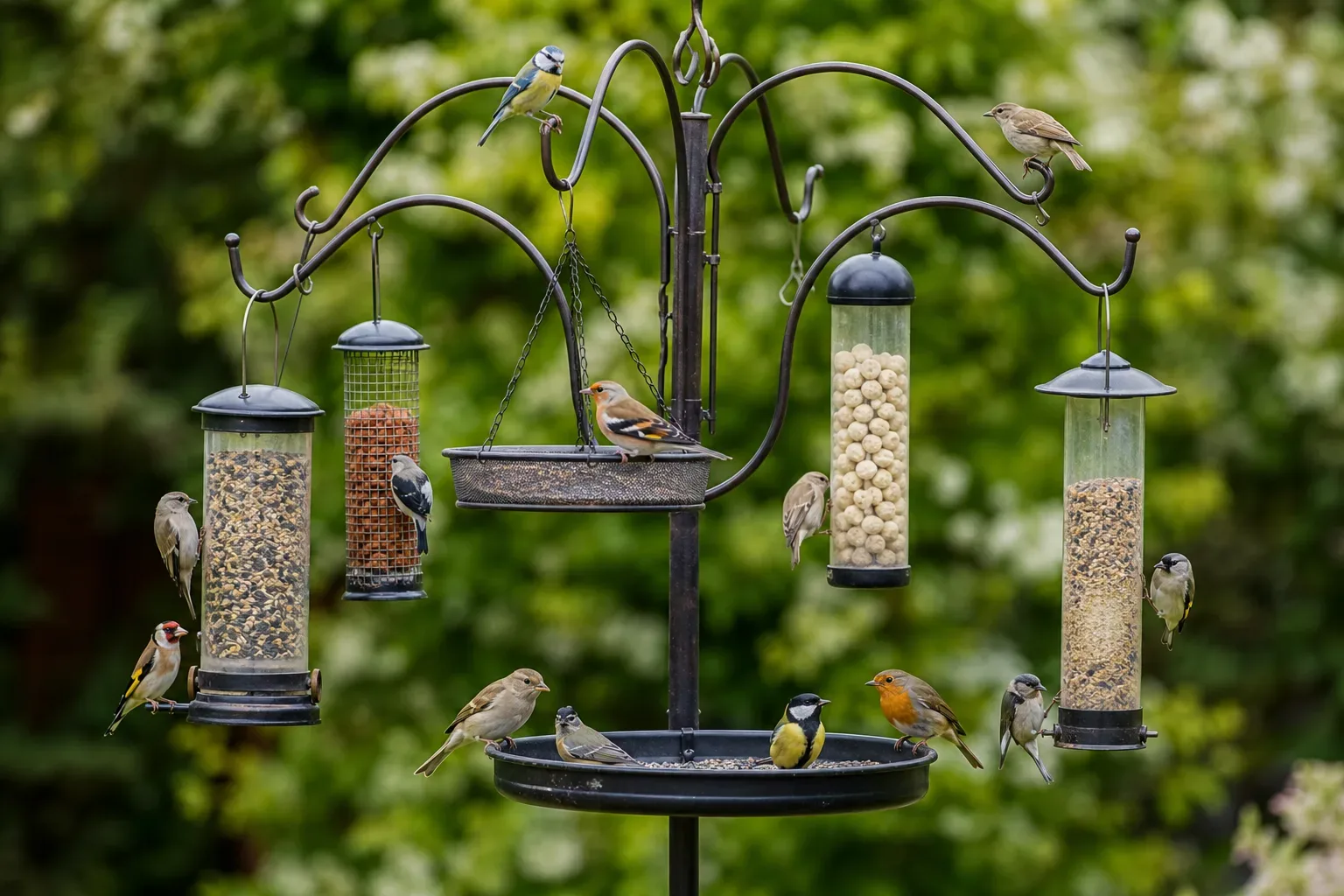
A freestanding feeding station is a multi-arm metal pole system that holds several feeders simultaneously. These cost £30–£80 and are worth considering if you want to attract a wide range of species without drilling multiple fixings into walls or fences. A good station lets you hang tube feeders, suet feeders, and a small platform feeder in one place.
What to Feed Garden Birds
Seed mixes cost roughly £1.50–£3.00 per kilogram, with no-mess and high-energy blends at the upper end. Sunflower hearts are among the most popular ingredients because they leave no husk debris on the ground. A quality mix avoids bulk-filler grains that most garden birds leave untouched.
Suet fat balls in a 6-pack cost £2–£5 and provide dense, high-calorie energy. They are especially valuable in cold weather and during the breeding season when adults need to feed themselves quickly between chick-feeding trips.
Nyjer seed attracts finches reliably and is best offered in a dedicated tube feeder with fine ports. Peanuts in a mesh feeder suit larger birds like nuthatches and great tits, but always buy aflatoxin-tested peanuts from a reputable supplier.
Where and How to Position Your Feeder
Height
Mount or hang feeders at least 1.5 metres off the ground. This height reduces the risk of cat predation, which is one of the most significant threats to feeding birds in UK gardens.
Distance from Cover
Place feeders 1–2 metres from shrubs or hedging. Birds need nearby cover to retreat to when startled, but positioning a feeder too close to dense vegetation gives cats an easy hiding spot.
Distance from Windows
Window strikes kill large numbers of garden birds annually. Position feeders either under 1 metre from glass, so a bird cannot build enough speed to cause injury, or over 3 metres away to give birds time to register the barrier. Mid-range distances are the most dangerous.
Keeping Feeders Clean and Safe
Clean all feeders every 1–2 weeks to prevent the spread of diseases including trichomonosis and salmonellosis. Use warm water with a mild disinfectant solution, rinse thoroughly, and allow feeders to dry before refilling. Rotate feeding positions periodically to prevent the build-up of droppings and seed husks on the ground beneath.
Remove any uneaten food that has become wet or mouldy, particularly from platform feeders. Spoiled food spreads disease rapidly among birds congregating in a small area.
Adding a Bird Bath
Plain tap water is suitable for a bird bath. Avoid additives, milk, or bread, none of which belong in or near a bird bath. Change the water regularly, scrub the basin to remove algae and droppings, and ensure the bath has a shallow, gently sloping area so smaller birds can wade safely.
A bird bath positioned near your feeder setup increases the overall attractiveness of your garden to birds and provides essential drinking and bathing water during dry summers and frozen winters alike.
Managing Squirrels
Weight-activated squirrel-proof feeders can significantly reduce seed loss. These designs close off access to the seed ports when a squirrel's weight is detected on the perch ring. They are not infallible, and a determined squirrel will sometimes find workarounds, but most gardeners find the reduction in seed theft substantial.
Smearing poles with squirrel-proof baffles or positioning feeders away from fences and branches that squirrels can leap from adds another layer of deterrence.
Seasonal Tips
Spring and Summer
Avoid loose peanuts and large dry bread pieces during the breeding season as they can choke nestlings. Stick to soft, high-energy foods and seed mixes. Parent birds will carry food back to the nest, and appropriately sized, safe food choices reduce the risk of harm to chicks.
Autumn and Winter
Increase suet and high-fat food offerings as temperatures drop. Top up feeders more frequently during cold snaps, as birds can deplete supplies quickly when they need extra energy to stay warm overnight. Check feeders and bird baths for ice each morning.
Getting Started: A Simple Setup
A practical starter setup requires very little investment. A tube feeder in the £5–£15 range, filled with a good no-mess seed mix, hung at 1.5 metres on a bracket or feeding station, cleaned fortnightly, and positioned sensibly away from windows and too-close cover, will attract birds within days in most UK gardens.
Add a suet feeder and a bird bath as a second step, then expand to a platform feeder and a feeding station when you want to attract a broader range of species. The setup scales naturally with your interest and budget.
Frequently Asked Questions
How Often Should I Clean My Garden Bird Feeders?
Clean feeders every 1–2 weeks using warm water and a mild disinfectant, then rinse and dry thoroughly before refilling. Regular cleaning prevents the spread of diseases such as trichomonosis and salmonellosis among the birds visiting your garden.
What Height Should I Hang a Garden Bird Feeder At?
Hang feeders at least 1.5 metres off the ground to reduce the risk of cats reaching birds while they are feeding. Positioning feeders 1–2 metres from shrubs gives birds nearby cover without providing cats a concealed launching point.
Is It Safe to Feed Garden Birds in Summer?
Year-round feeding is recommended by the RSPB and BTO, not just in winter. Summer feeding supports breeding birds that need reliable energy during the demanding chick-rearing period, though you should avoid loose peanuts and large bread pieces that could choke nestlings.
Are Net Bags for Fat Balls Safe for Birds?
No. Loose mesh or net bags should be avoided because they trap birds' feet and beaks, causing serious injury. Always transfer fat balls into a proper suet feeder cage before putting them out.
How Can I Stop Squirrels from Emptying My Bird Feeders?
Weight-activated squirrel-proof feeders can significantly reduce seed loss by closing the ports when a squirrel's weight is detected. Pairing them with a pole baffle and positioning feeders away from fences or overhanging branches provides additional deterrence, though no single method is completely foolproof.